
When Domestic Violence and Trafficking Overlap
October is Domestic Violence Awareness Month, a time to raise awareness, support survivors, and recognize the many ways abuse can affect someone’s life. It is also an opportunity to better understand the connection between domestic violence and human trafficking.
Domestic violence and trafficking are different forms of abuse, but they can overlap. Both can involve threats, isolation, financial control, manipulation, coercion, and fear. Sometimes, the abusive partner and the trafficker are the same person.
Trafficking does not always begin with a stranger, kidnapping, or someone being physically held against their will. It can begin inside a relationship.
A partner may initially provide affection, security, housing, money, or a sense of belonging. Over time, that relationship can become increasingly controlling. They may isolate their partner from friends and family, control money or transportation, threaten them, exploit their vulnerabilities, or pressure them into situations they never freely chose.
When someone uses force, fraud, or coercion to exploit another person for commercial sex, the fact that they are dating, married, or otherwise in a relationship does not make that exploitation less real.
Power and Control
Domestic violence is not always a predictable cycle. At its core, it is about power and control.
An abusive partner may use isolation, financial dependence, threats, intimidation, emotional abuse, sexual violence, or coercion to make leaving feel impossible. Those same dynamics are frequently present in trafficking—which is one reason the line between intimate partner violence and exploitation can become so blurred.
A person may also experience multiple forms of abuse at the same time. Someone experiencing domestic violence may be financially dependent on the person harming them. They may have been cut off from their support system. They may fear homelessness, losing their children, retaliation, or further violence if they leave.
For someone being exploited by an intimate partner, those barriers can become even more complicated.
“Why Didn’t They Just Leave?”
It is one of the most common questions asked about both domestic violence and trafficking.
But leaving is rarely as simple as walking away.
A survivor may fear retaliation. They may depend on their partner financially. They may have nowhere safe to live. They may have children or pets they are trying to protect. They may have been threatened repeatedly or convinced that no one else will help them.
And they may still love the person hurting them.
Abuse does not erase attachment. Manipulation does not eliminate hope. A survivor may genuinely believe that things will change, remember the person their partner was at the beginning of the relationship, or feel responsible for helping them become that person again.
In many abusive relationships, the period when someone attempts to leave can also be one of the most dangerous.
The better question is not:
“Why didn’t they leave?”
It is:
“What barriers are keeping them from being able to leave safely?”
Awareness Should Lead to Support
Domestic Violence Awareness Month is about more than recognizing the signs of abuse. It is an opportunity to change the way we respond to people experiencing it.
Listen without judgment.
Believe survivors when they tell you something is wrong.
Respect their ability to make decisions about their own lives.
Offer practical support when you can.
When we understand domestic violence and trafficking through the lens of power, control, and vulnerability, we stop asking why someone stayed.
Instead, we begin asking a much more important question:
What would make safety possible?
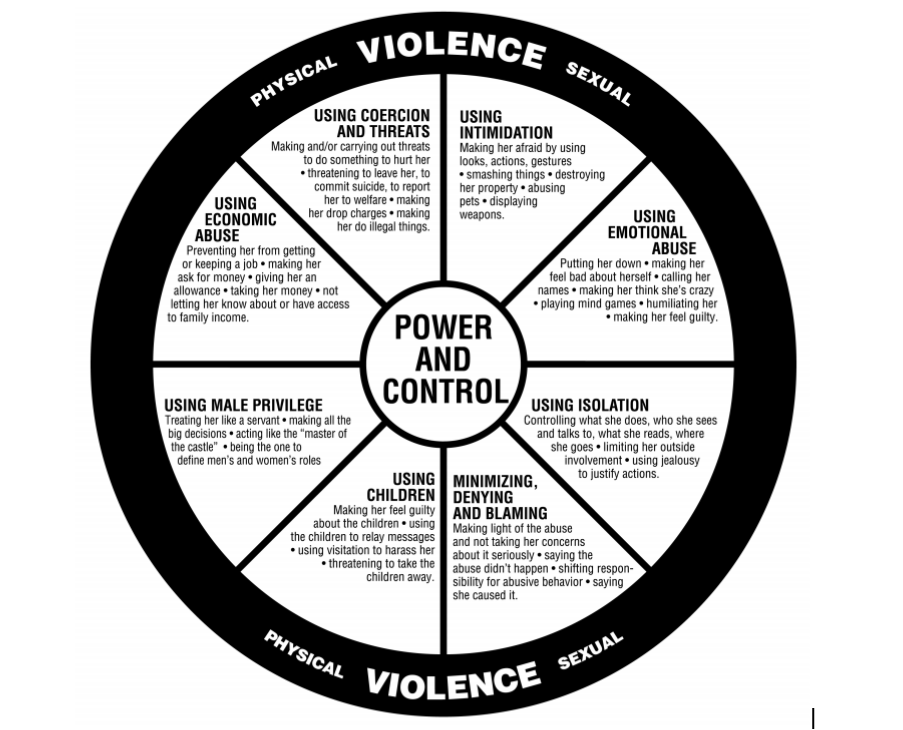
Copyright by the Domestic Abuse Intervention Project
202 East Superior Street, Duluth, MN, 55802
218-722-2781
Need Support?
If you or someone you know is experiencing domestic violence and needs support, you don't have to navigate it alone. The National Domestic Violence Hotline provides confidential support and resources 24/7.
Call 1-800-799-SAFE (7233), text START to 88788
Move Hope Forward
For survivors of trafficking, safety begins with having somewhere to go for help. It starts with having someone who believes them, access to supportive services, or the opportunity to begin rebuilding a life on their own terms.
At Covered Colorado, we walk alongside adult women who have exited sex trafficking, providing safe housing, trauma-informed care, advocacy, and support as they move toward healing and self-sufficiency. Your support helps make that next step possible.
Your gift can help provide the safety, support, and opportunity a survivor needs to begin what comes next.